How to Find the Right Deburring Machine

Choosing the right deburring machine starts with knowing what your production really needs. Every workshop, material and finishing goal is different — and so is the ideal setup. Some manufacturers only need to remove sharp burrs after laser cutting, while others require edge rounding or a high-grade surface finish in one pass.

At Q-Fin, we design our systems to match those differences. Each machine combines precision engineering with practical usability, allowing you to balance speed, surface quality and cost efficiency. The goal is simple: consistent results, minimal handling, and a perfect finish every time.

In this guide, we’ll walk through the key factors that determine which deburring solution fits your process best. From material type and part geometry to production volume and automation level.

Step 1: Understand your application

Every production process leaves its own signature on the material. Laser cutting, punching, milling or waterjet cutting all create different types of burrs, sharp edges or oxide layers. The first step in choosing the right deburring machine is understanding what kind of imperfections you’re dealing with.

For example, laser-cut parts often show fine burrs and oxide that require precise brush control and vacuum extraction. Punched parts may have rough edges around holes, demanding a combination of belt and brush heads for consistent results. Milled components tend to show tool marks or uneven transitions, which call for flexible finishing belts and accurate pressure regulation.

By analysing your production process and the materials you work with, you can determine the level of deburring and finishing required. That insight forms the foundation for selecting the right Q-Fin configuration — one that matches your workflow, not the other way around.

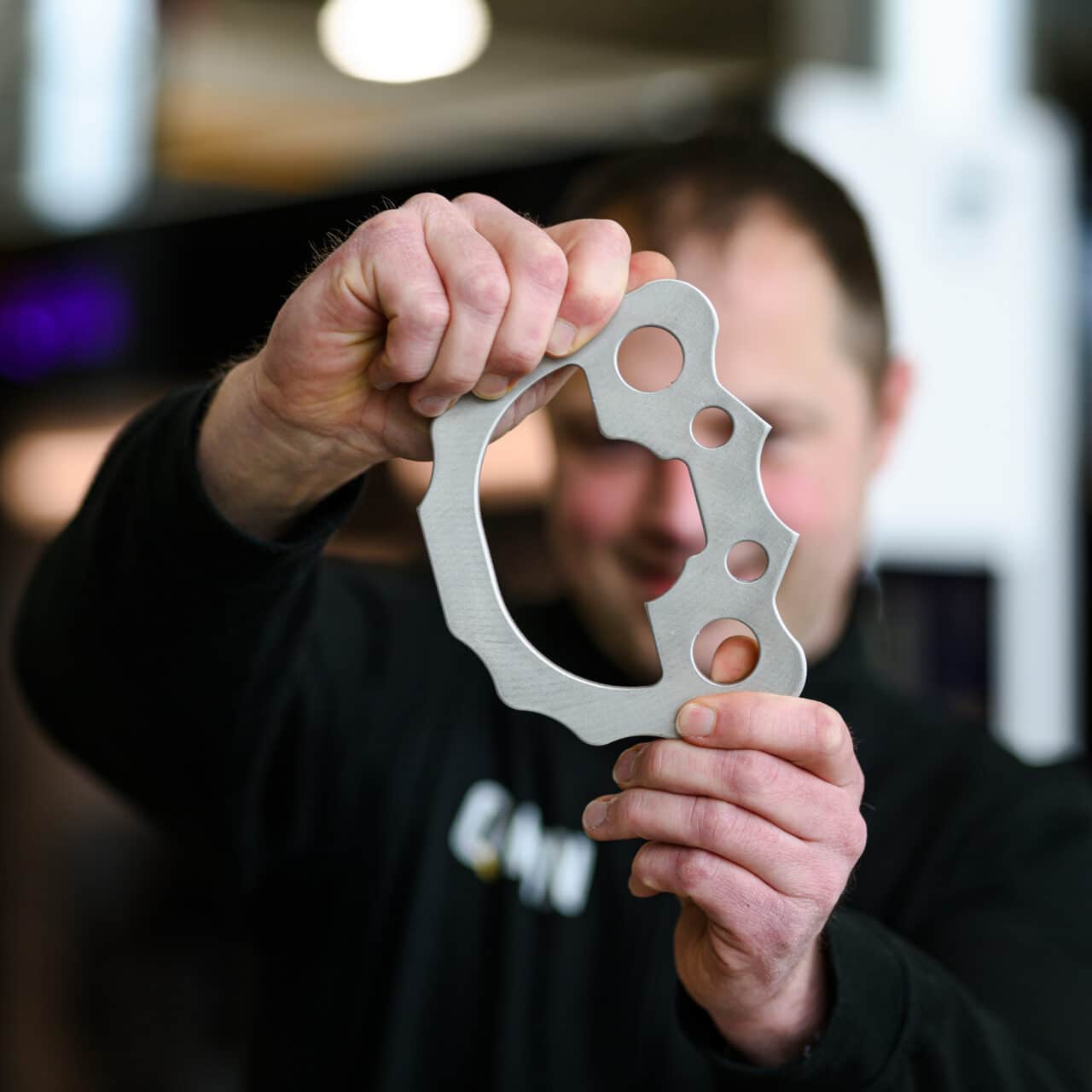
deburring machine

Step 2: Define the desired finish

Not every part needs the same finish. Some components only require basic burr removal, while others demand a precise edge radius or a perfectly even surface. Knowing what level of finish your product needs will narrow down your choice of deburring machine.

If the goal is deburring only, a single abrasive belt may be sufficient to remove sharp edges and small burrs. For applications that require edge rounding, Q-Fin machines use rotating brushes that create a consistent, controlled radius — essential for coated, painted or anodised parts. When a surface finish is part of the specification, fine-grain belts and brushes deliver a uniform, aesthetic result in the same process step.

Each Q-Fin system can be configured to combine these results in one pass. That’s how you achieve reliable quality with less manual work, and a finish that matches your production standards exactly.

Step 3: Match your production flow

A deburring machine should fit seamlessly into your existing workflow. The type of production you run (from small batches to continuous series) determines which system design offers the best efficiency.

For low-volume or varied production, a compact machine with manual feed gives maximum flexibility. Operators can adjust settings quickly when switching between materials or part sizes. For high-volume production, a wide-belt machine with automated feed and vacuum transport ensures consistent results, part after part.

Think also about part dimensions and throughput. Large sheet metal components require a different setup than small precision parts. Q-Fin machines are modular and scalable, so the same technology can serve both workshop-level operations and fully automated lines.

By matching machine capacity and configuration to your workflow, you minimise downtime and handling, turning deburring from a manual bottleneck into a streamlined, predictable process.

Read more

deburring machine

Step 4: Consider efficiency and maintenance

The right deburring machine doesn’t just deliver a good finish: it keeps performing day after day. Efficiency and maintenance are key factors when evaluating long-term value.

A well-designed system should offer quick tool changes, easy cleaning, and stable performance even under continuous use. Q-Fin machines are built for minimal downtime: brush heads can be replaced within minutes, and the integrated vacuum system keeps the working area clean and dust-free. This reduces wear and maintains consistent surface quality.

Energy use and operating costs also matter. Efficient motors, smart speed control and durable abrasives ensure that every part of the process adds value instead of waste.

When maintenance is simple and predictable, production becomes more reliable. That’s how Q-Fin technology helps manufacturers focus less on upkeep, and more on delivering perfect parts on time.

Step 5: Test before you decide

Every production process is unique, and the best way to find the right deburring machine is to see it in action. Testing your own parts shows how different machine configurations handle your materials, burr types and finishing goals.

At Q-Fin, we invite manufacturers to send their samples or visit our Experience Center for a live demonstration. Our engineers analyse each part, set up the optimal process parameters and show the results — so you can compare edge quality, speed and consistency firsthand.

This practical approach takes guesswork out of your investment decision. You’ll know exactly what to expect from the machine before it enters your production line.

Book your demo